
Picking the wrong SEO company can cost you months of time, thousands of dollars, and — worst of all — real patients who never found your practice. The dental SEO space is crowded, and not every agency that claims to specialize in dentistry actually knows what they’re doing.
So how do you tell the difference between a company that will genuinely grow your practice and one that will just send you monthly reports full of numbers that don’t mean much?
That’s exactly what this guide covers. By the end, you’ll know what to look for, what questions to ask, and what red flags should make you walk away.
Why Dental SEO Is Different From General SEO
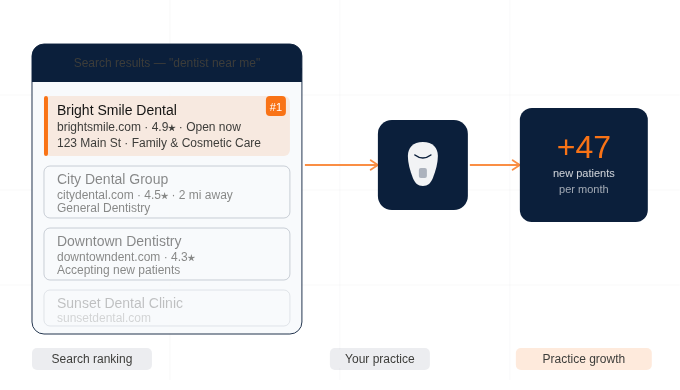
Before you start evaluating companies, it helps to understand why dental SEO isn’t the same as regular SEO.
Your practice serves a specific geographic area. Someone searching for a dentist in Kano isn’t going to drive three hours to visit your clinic — they want someone nearby. That makes local SEO the foundation of everything. It’s not just about ranking on Google; it’s about showing up when someone in your city or neighborhood searches for the exact service you offer.
Dental SEO also involves a lot of nuance around patient intent. A person searching “tooth pain relief” is in a different mindset than someone searching “dental implants near me.” A good dental SEO company understands this distinction and builds content and strategy around it — not just generic keyword targets.
Add to that the compliance considerations around healthcare marketing, the need to build trust through online reviews, and the importance of a well-optimized Google Business Profile — and you can see why hiring a generalist SEO agency often falls flat.
The 7 Qualities for Best Dental SEO Company
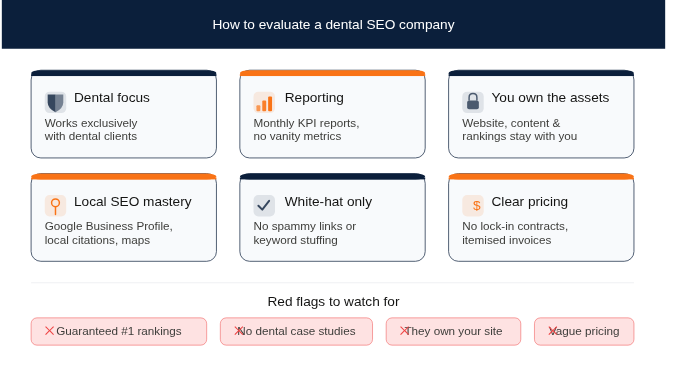
1. Look for Genuine Dental Industry Experience
The first thing to verify is whether the company has actually worked with dental practices before — not just healthcare broadly, but dentistry specifically.
Ask them directly: “Can you share examples of dental clients you’ve worked with and the results you’ve delivered?” A legitimate dental SEO company will have case studies, before-and-after ranking comparisons, or at minimum, references you can speak with.
Be skeptical of vague answers like “we’ve worked with many healthcare clients.” That’s a dodge. Dental SEO involves specific service pages — cleanings, crowns, veneers, orthodontics, implants — and each requires a different content approach. An agency that doesn’t know the difference between a general dentist and a periodontist probably doesn’t have the depth you need.
Industry experience also matters for keyword research. Dental keywords are competitive in most cities. An experienced agency will know how to find the right balance between high-volume terms and realistic ranking opportunities for a practice your size.
2. Understand What Services Are Actually Included
Not all dental SEO packages are built the same. Some agencies charge a flat monthly fee but only handle one or two tasks. Others offer comprehensive services that touch every part of your online presence. You need to know exactly what you’re getting.
A solid dental SEO service should typically include:
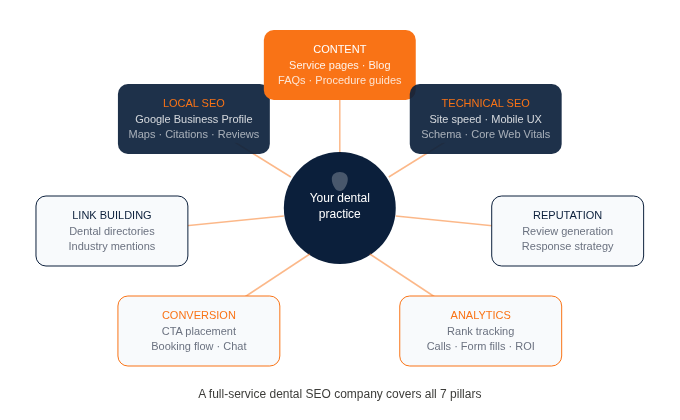
- Local SEO optimization — Google Business Profile management, local citations, map pack rankings
- On-page SEO — Optimizing your website’s service pages, meta titles, descriptions, and headings
- Content creation — Blog posts, FAQs, location pages, and service pages written for both patients and search engines
- Technical SEO — Site speed, mobile usability, crawlability, schema markup for dental practices
- Link building — Earning backlinks from relevant, trustworthy websites
- Review management — Strategies to generate and respond to patient reviews
If an agency only focuses on one or two of these without a plan for the others, you’re likely leaving results on the table. Ask for a clear breakdown of what’s included in their package and what’s considered an add-on.
Read also: Dental SEO Cost: How Much Should a Dental Practice Budget?
3. Ask About Their Approach to Local SEO
For most dental practices, local SEO is the highest-value work an agency can do. Your Google Business Profile is often the first thing a new patient sees — before they even visit your website.
Ask the company how they plan to optimize and maintain your GBP. Will they update your hours, post regularly, respond to reviews, add photos? Will they build and clean up your local citations — the listings on sites like Yelp, Healthgrades, and Zocdoc where your name, address, and phone number need to be consistent?
A company that waves these things off as secondary doesn’t understand how local dental search actually works.
Also ask whether they’ll build location-specific pages if you have multiple locations, or if they’ll target nearby neighborhoods and surrounding areas through localized content. These are strategies that make a real difference for practices that want to expand their reach.
Read also:
- Local Seo For Beginners
- Local SEO
- How to Create Google Business Profile
- Google Business Profile Guide
- Local SEO Keyword Research
4. Evaluate Their Transparency Around Reporting
One of the most common complaints dentists have about SEO agencies is this: “We get monthly reports, but we have no idea what they mean or whether anything is actually improving.”
A trustworthy dental SEO company will report on metrics that connect to your actual business goals — not just vanity numbers.
Here’s what good reporting looks like:
- Keyword rankings — Which terms are you ranking for and how have they moved?
- Organic traffic — How many people are visiting your site from search, and is that number growing?
- Calls and form submissions — Are those visitors actually contacting your practice?
- Google Business Profile performance — Calls, direction requests, and profile views from your GBP listing
- New patient attribution — Can they help you track which patients came through search?
If a company’s reporting is all impressions and clicks with no tie to actual patient inquiries, push back. Ask them: “How will I know if this is working?”
5. Watch Out for Common Red Flags
Some warning signs are easy to miss when you’re being sold to. Here are the ones worth paying attention to.
Guaranteed #1 rankings. No reputable SEO company guarantees first-page or top-spot rankings. Google’s algorithm is complex and constantly changing. If someone promises you’ll rank #1 within 30 days, they’re either misleading you or planning to use tactics that could get your site penalized.
No clear strategy. If the agency can’t explain what they’re going to do and why, that’s a problem. You should understand the plan, even at a high level, before you sign anything.
Locked-in content ownership. Make sure that any content, pages, or links built during your engagement belong to you — not the agency. Some companies retain ownership of the work they produce, which means if you leave, you lose everything.
Generic, templated websites. Some dental SEO companies upsell you on a new website that looks just like every other dental site they’ve built. Your website should represent your practice, not a template designed to make their job easier.
No clear communication schedule. You should know in advance how often you’ll have calls, who your point of contact is, and how long it typically takes to get a response to a question.
6. Understand Their Content Strategy
Content is one of the most powerful tools in dental SEO — and it’s also where the biggest quality gap between agencies tends to show up.
Ask the company: who writes the content, and what’s the process?
Some agencies outsource content to low-cost writers with no dental knowledge. The result is generic blog posts that don’t speak to real patient concerns and don’t rank for anything useful. You want content that’s accurate, helpful, and written with your specific patient base in mind.
Good dental content covers things like:
- Answers to questions patients actually ask (“Does a root canal hurt?” or “How long do veneers last?”)
- Service pages that explain procedures clearly without being overly clinical
- Local content that connects your practice to the community it serves
Ask to see examples of dental content they’ve written for other clients. Read it. Does it sound like something a real person would want to read, or does it feel like filler?
7. Consider the Contract Terms Carefully
Before signing anything, read the contract closely. A few things to check:
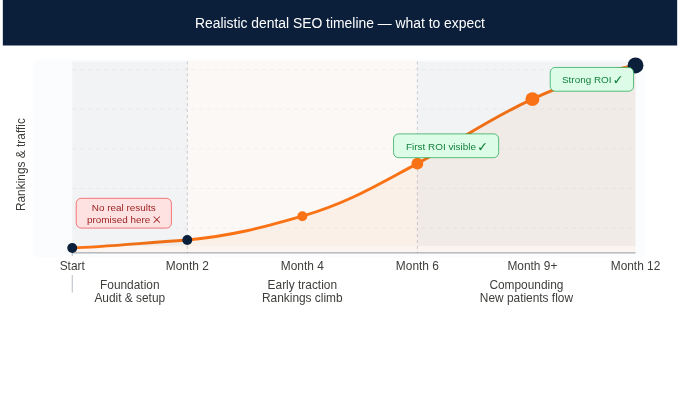
Contract length. SEO takes time — three to six months is a realistic window before you start seeing meaningful results. But be cautious of contracts longer than 12 months, especially with a company you haven’t worked with before. A 6-month initial agreement is reasonable.
Exit terms. What happens if you want to cancel? Is there a notice period? Are there penalties? Know this upfront.
Pricing structure. Understand exactly what you’re paying and what triggers additional costs. Some agencies start low and stack on fees for content, extra locations, or additional keywords.
Performance benchmarks. Some contracts include performance clauses — if the agency doesn’t hit certain targets, you have grounds to exit early or renegotiate. This is worth asking about.
8. Have a Real Conversation Before You Decide
The last step — and honestly one of the most revealing — is simply having a proper discovery call with the company before you commit.
Pay attention to how they listen. Do they ask about your practice, your current patient flow, your goals, and the areas you serve? Or do they launch straight into a pitch about their service packages?
A company that listens before it talks is more likely to build a strategy around your specific needs. One that pitches generic packages from the start is probably selling the same thing to every dental practice they talk to.
Ask them tough questions:
- “What’s the biggest challenge you see with our current website?”
- “How long before we should expect to see results — and what would those results look like?”
- “What’s your process when rankings drop or something isn’t working?”
- “How do you stay updated when Google changes its algorithm?”
Their answers — and how thoughtfully they engage — will tell you a lot.
Making the Right Choice
Choosing a dental SEO company isn’t something to rush. Take your time, compare a few options, and don’t let pressure tactics push you into a decision before you’re ready.
The right company will be transparent about their process, honest about timelines, and genuinely interested in your practice’s growth — not just locking you into a contract. They’ll have real dental experience, a clear strategy, and reporting that helps you understand what’s working and what needs to change.
Done right, dental SEO is one of the most cost-effective ways to consistently bring new patients through your door. The key is finding a partner who knows what they’re doing — and who treats your practice like it actually matters to them.
Start with the questions in this guide, trust what you observe in those early conversations, and you’ll be in a much better position to choose a dental SEO company worth your investment.